Neurodinamic Atlas 1.0 · Atlas neurodinámico periférico

neurodinamicatlas

Neurodinamic Atlas

Atlas docente para el estudio de la anatomía de los nervios periféricos y su relación con el movimiento articular y las pruebas neurodinámicas.

Preparando el modelo anatómico…

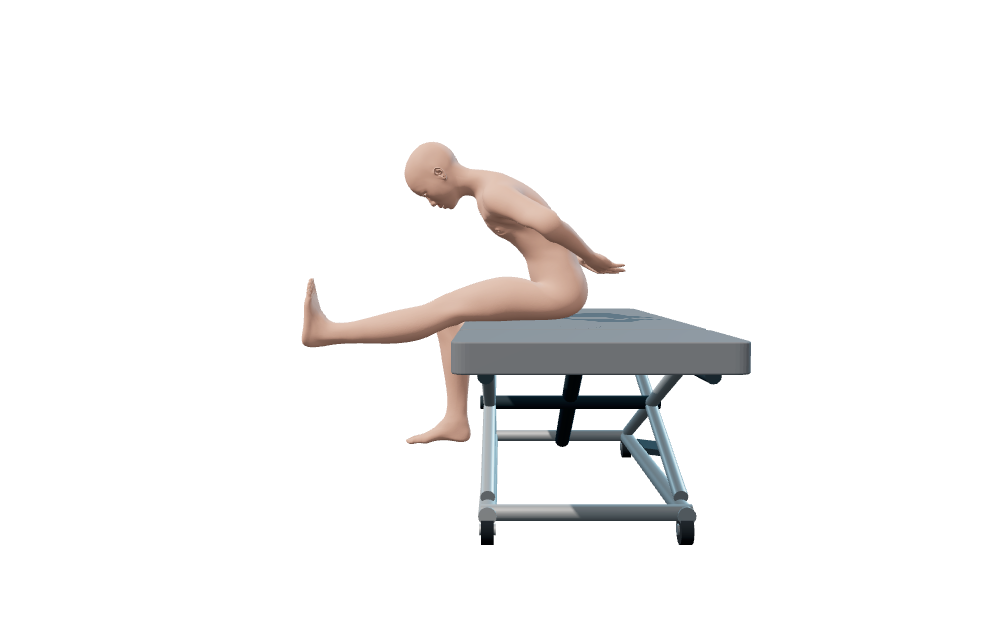
Posición final del Slump test: paciente sentado sobre la camilla, tronco y cuello flexionados y rodilla extendida

Una anatomía. Distintas formas de comprenderla.

Biblioteca anatómica
Guías de exploración
Ecografía y modelo 3D
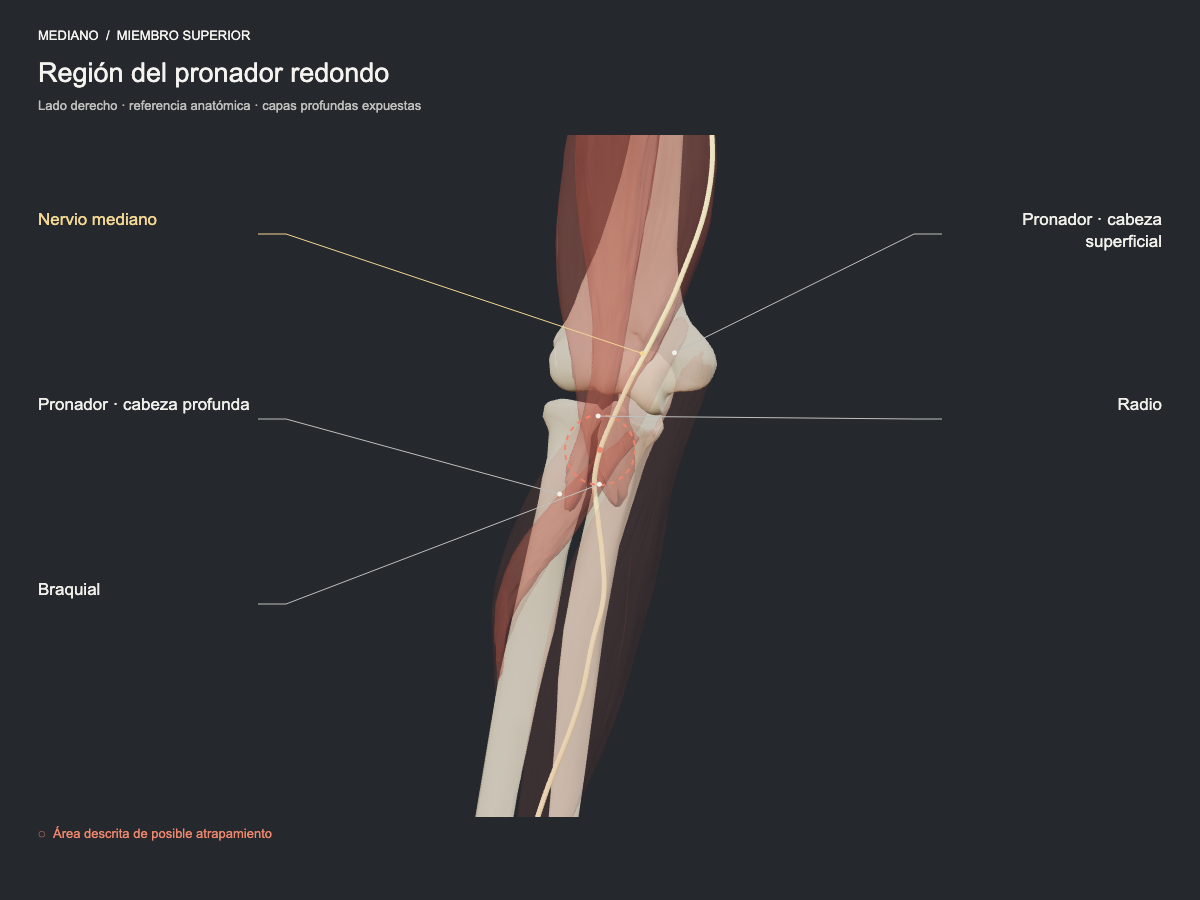
Lámina del mediano en la región del pronador
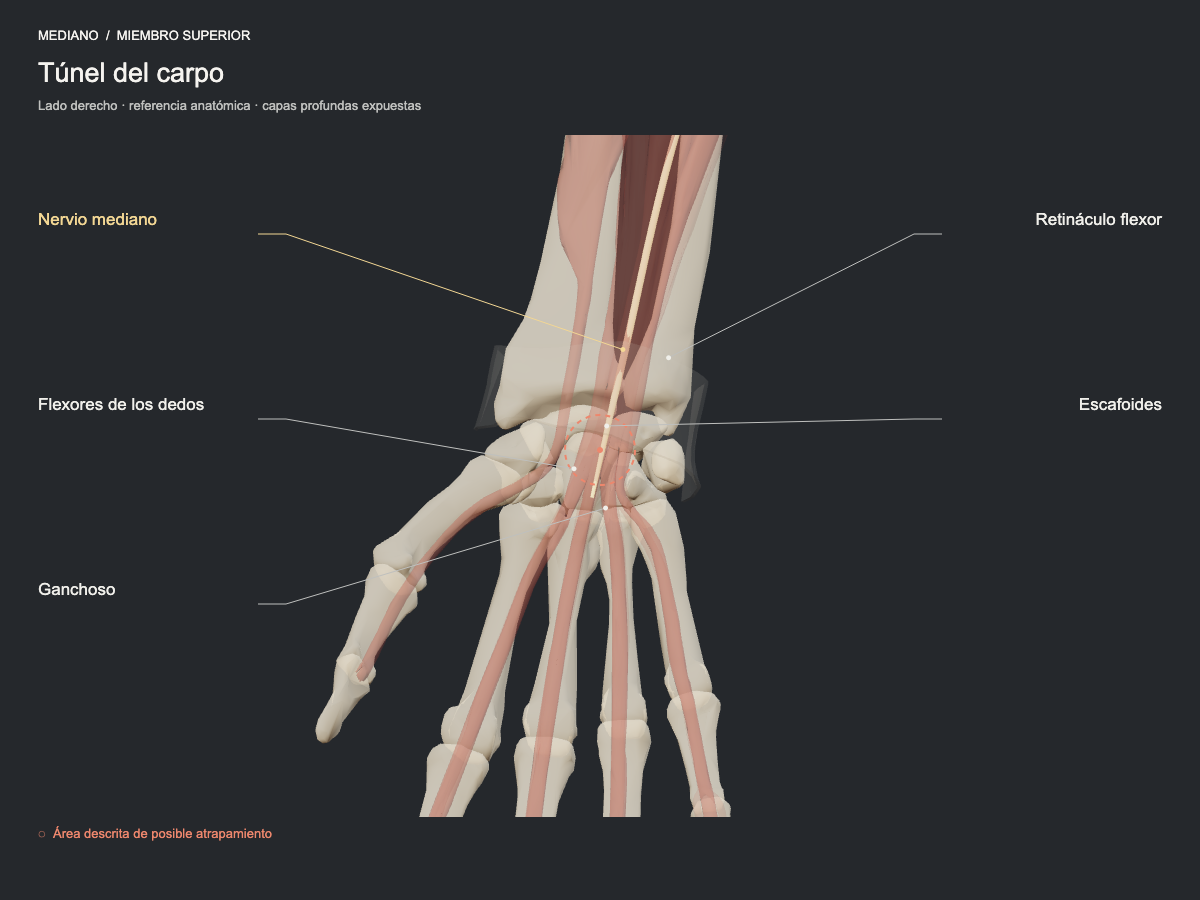
Lámina del mediano en el túnel del carpo

Zonas de compresión de los nervios periféricos.

Consulta láminas anatómicas para localizar y comparar zonas de compresión en distintos nervios, con sus relaciones tisulares y fuentes de referencia.

Relación
nervio-test.

Elige una prueba y explora su secuencia. Cada test aplica un sesgo mecánico a un trayecto nervioso.

Miembro superior

Miembro inferior

Un atlas para cada etapa.

Compara lo que incluye cada nivel. En este prototipo puedes elegir una vista previa de acceso.

Gratis

Para empezar con el modelo y dos pruebas.

  • Superficie del modelo
  • Mediano y Slump

Estudiante

Para aprender las secuencias neurodinámicas.

  • Todos los tests
  • Técnicas y guías paso a paso

Docente

Para consultar todo el atlas.

  • Todo Estudiante
  • Biblioteca y ecografía + 3D
Funciones incluidas en cada nivel
ContenidoGratisEstudianteDocente
Anatomía exteriorIncluidaIncluidaIncluida
ULNT1 del mediano y SlumpIncluidosIncluidosIncluidos
Todos los tests de miembro superior e inferior—IncluidosIncluidos
Técnicas slider y tensioner—IncluidasIncluidas
Guías y pasos en el visor—IncluidosIncluidos
Biblioteca anatómica y de compresiones——Incluida
Ecografía docente + 3D——Incluida

La selección no crea una cuenta ni realiza un cobro. Condiciones comerciales pendientes: xxxx. Las licencias de los recursos se consultan por separado.

Técnicas y evidencia para profundizar

Sliders y tensioners: qué cambia.

Observa la coordinación de los extremos y el comportamiento del tramo dibujado. Mueve el control para comparar ambos mecanismos a la vez.

Slider · deslizamiento

Un extremo aumenta la demanda; el otro la reduce.

Proximal: ↑ demandaDistal: ↓ demandaSe favorece el desplazamiento.Menor aumento de deformación en el estudio.

Tensioner · carga neural

Los dos extremos aumentan la demanda.

Proximal: ↑ demandaDistal: ↑ demandaAumenta la longitud del lecho neural.Mayor aumento de deformación en el estudio.

Trazo gris discontinuo: posición inicial. Tramo claro: posición actual. Las flechas indican el desplazamiento esquemático del tramo, no la dirección de una articulación concreta. Sin escala: no cuantifica elongación ni fuerza; un slider tampoco implica deformación nula.

Coppieters y Butler · estudio biomecánico cadavérico de mediano y cubital

Comparar las técnicas

Sliders frente a tensioners: diferencias de coordinación, no una pauta de tratamiento.
AspectoSlider · deslizamientoTensioner · carga neural
CoordinaciónAumenta la demanda en un extremo y disminuye en el otro.Aumenta la demanda desde ambos extremos.
Comportamiento mecánicoFavorece la excursión con menor aumento de deformación en los montajes estudiados.Produce mayor aumento de deformación que el slider en esos montajes.
InterpretaciónMenor deformación no significa ausencia de carga.Mayor carga no demuestra mayor beneficio clínico.
Qué enseña el visorLa biblioteca permite explorar el mecanismo manualmente. Los tests 3D muestran secuencias de exploración y su bucle no prescribe un tratamiento.

Estudio cadavérico de mediano y cubital · fuente de la comparación mecánica

Evidencia científica sobre neurodinámica

Distingue la utilidad de una prueba para orientar la exploración de los resultados de una intervención. Lee población, resultado y certeza antes de trasladar una conclusión a la práctica.

Interpretar los ULNT

Revisión sistemática y metaanálisis de 12 estudios

Población
Neuropatías del miembro superior, incluida radiculopatía cervical y túnel del carpo
Resultado
La precisión cambia según la condición y el criterio utilizado. La diferenciación estructural influye en el rendimiento del test.
Certeza y límites
Certeza de muy baja a moderada. Un test aislado no confirma una neuropatía; necesita contexto clínico.
Albert-Lucena y colaboradores · 2025

Radiculopatía cervical

Actualización de revisión sistemática; 8 estudios de pruebas físicas

Población
Personas estudiadas por posible radiculopatía cervical dolorosa
Resultado
Los resultados de exploración pueden contribuir al razonamiento junto a la historia clínica y otras pruebas.
Certeza y límites
Evidencia escasa. El resumen califica los resultados combinados de ULNT como de certeza baja y su conclusión general como muy baja. Las estimaciones dependen de las poblaciones y protocolos incluidos.
Thoomes y colaboradores · 2026

Movilización neural

Revisión sistemática con metaanálisis de 39 ensayos

Población
Adultos con dolor musculoesquelético
Resultado
Se observaron efectos favorables en ciertos resultados de dolor lumbar y cervical, con diferencias entre condiciones y medidas.
Certeza y límites
Confianza muy baja en las estimaciones. Para otras condiciones, resultados inconcluyentes. No establece una dosis universal ni demuestra beneficio para cada nervio del atlas.
Baptista y colaboradores · 2024

Consultar la biblioteca científica

Neurodinamic AtlasAtlas científico · versión 1.0
Biblioteca

El visor representa un cuerpo humano articulado con piel, huesos, raíces, plexos y nervios periféricos de los miembros inferior y superior. La tabla y las métricas del inspector ofrecen una alternativa textual a la información visual.

EXPLORACIÓN ANATÓMICA

Modelo neurodinámico

Modelo 3D
Cargando anatomía tridimensional…
Atlas neurodinámico interactivo

Elevación de pierna rectaTrayectos anatómicos, movimiento articular y cambio geométrico relativo

Test SLRReferencia inicio del testLado derechoModelo proceduralNervio ciáticoÍndice 8/100

Arrastra para rotar o desplazar · rueda/pellizco para zoom · Inicio para ajustar

Modelo propio: validando Neurodinamic-Humano-1.0-base.glb

Nervio ciático

L4–S3 · vía posterior

SIMULACIÓN
Δ trayecto+0,0 mm
Índice visual medio8/100
Índice regional máximo8/100

Mayor cambio de arco regional: muslo posterior.

Índice visual heurístico · escala fija
reposo50100 alta
Ciático · 8/100 · reposo
Elevación de pierna recta100 %

GUÍA VISUAL · MIEMBRO SUPERIOR

Neurodinámica del miembro superior

Tres pruebas ULNT · posición inicial → posición final

Paciente en decúbito supino. La cabeza comienza en posición neutra; la inclinación cervical contralateral se añade al final. Se representa el brazo derecho.

MEDIANO — ULNT1

POSICIÓN INICIAL

MEDIANO — ULNT1: posición inicial en decúbito supino, con detalle de la mano
En decúbito supino, cabeza y cuello neutros, cintura escapular relajada y hombro junto al cuerpo. Codo flexionado; antebrazo y muñeca neutros.

POSICIÓN FINAL

MEDIANO — ULNT1: posición final en decúbito supino, con detalle de la mano
Escápula descendida y hombro separado unos 100°, en rotación externa. Antebrazo en supinación; muñeca y dedos extendidos y codo prácticamente recto. Al final se añade inclinación cervical hacia el lado contrario al brazo explorado.

Secuencia Depresión escapular → abducción → extensión de muñeca y dedos → supinación → rotación externa → extensión de codo → inclinación cervical contralateral.

RADIAL — ULNT2b

POSICIÓN INICIAL

RADIAL — ULNT2b: posición inicial en decúbito supino, con detalle de la mano
En decúbito supino, cabeza y cuello neutros, cintura escapular relajada y brazo próximo al tronco. Codo flexionado; antebrazo y muñeca neutros.

POSICIÓN FINAL

RADIAL — ULNT2b: posición final en decúbito supino, con detalle de la mano
Hombro en rotación interna y abducción de 70° en esta variante docente. Codo extendido, antebrazo pronado y muñeca en flexión palmar y desviación cubital. Dedos cerrados y pulgar en oposición y flexión. Al final se añade inclinación cervical hacia el lado contrario al brazo explorado.

Secuencia Depresión escapular → extensión de codo → rotación interna → pronación → flexión de muñeca y dedos + desviación cubital → abducción hasta 70° → inclinación cervical contralateral.

CUBITAL — ULNT3

POSICIÓN INICIAL

CUBITAL — ULNT3: posición inicial en decúbito supino, con detalle de la mano
En decúbito supino, cabeza y cuello neutros, cintura escapular relajada y brazo ligeramente separado del tronco. Codo extendido; antebrazo y muñeca neutros.

POSICIÓN FINAL

CUBITAL — ULNT3: posición final en decúbito supino, con detalle de la mano
Hombro abducto unos 105° y en rotación externa, antebrazo pronado, muñeca y dedos en extensión dorsal y muñeca en desviación radial de 20°. El codo se flexiona progresivamente hasta aproximar la mano a la región temporal, junto con la inclinación cervical contralateral.

Secuencia Depresión escapular → abducción y rotación externa con codo extendido → pronación → extensión dorsal de muñeca y dedos → desviación radial → flexión gradual del codo junto con inclinación cervical contralateral.

Posiciones representativas para docencia; los ángulos no son objetivos obligatorios. La inclinación contralateral permite observar la diferenciación estructural. Referencia: ULNT1 y movimiento cervical · Referencia: secuencia cubital.

GUÍA VISUAL · MIEMBRO INFERIOR

Neurodinámica del miembro inferior

Ocho pruebas y variantes · posición inicial → posición final

Las posiciones reproducen los protocolos del visor en el lado derecho. Las flechas señalan las articulaciones que cambian. Los ángulos ilustran el movimiento y no son objetivos clínicos obligatorios.

CIÁTICO — SLR / EPE

POSICIÓN INICIAL

CIÁTICO — SLR / EPE: posición inicial123Postura completa1 · Cadera2 · Rodilla3 · Tobillo
En decúbito supino, cabeza neutra, pelvis apoyada y ambas rodillas extendidas. Tobillo en posición neutra.

POSICIÓN FINAL

CIÁTICO — SLR / EPE: posición final123Postura completa1 · Cadera2 · Rodilla3 · Tobillo
La pierna explorada se eleva mediante flexión de cadera, manteniendo la rodilla extendida y el tobillo neutro. El visor representa aproximadamente 70° de flexión de cadera.

SecuenciaFlexión progresiva de cadera con rodilla extendida.

TIBIAL — SLR + DORSIFLEXIÓN

POSICIÓN INICIAL

TIBIAL — SLR + DORSIFLEXIÓN: posición inicial, con detalle de tobillo y pie123Postura completa1 · Cadera2 · Rodilla3 · TobilloDetalle de tobillo y pie
En decúbito supino, pierna apoyada, rodilla extendida y tobillo neutro.

POSICIÓN FINAL

TIBIAL — SLR + DORSIFLEXIÓN: posición final, con detalle de tobillo y pie123Postura completa1 · Cadera2 · Rodilla3 · TobilloDetalle de tobillo y pie
Con la pierna elevada y la rodilla extendida se añade dorsiflexión de tobillo: el dorso del pie se aproxima a la pierna. Se muestra el componente distal de la vía ciático-tibial.

SecuenciaFlexión de cadera → dorsiflexión de tobillo.

FIBULAR — SLR + FLEXIÓN PLANTAR / INVERSIÓN

POSICIÓN INICIAL

FIBULAR — SLR + FLEXIÓN PLANTAR / INVERSIÓN: posición inicial, con detalle de tobillo y pie123Postura completa1 · Cadera2 · Rodilla3 · TobilloDetalle de tobillo y pie
En decúbito supino, rodilla extendida y pie en posición neutra.

POSICIÓN FINAL

FIBULAR — SLR + FLEXIÓN PLANTAR / INVERSIÓN: posición final, con detalle de tobillo y pie123Postura completa1 · Cadera2 · Rodilla3 · TobilloDetalle de tobillo y pie
Con la pierna elevada se añade flexión plantar e inversión: el pie apunta distalmente y la planta gira hacia medial. La rodilla permanece extendida.

SecuenciaFlexión de cadera → flexión plantar e inversión del tobillo.

CIÁTICO — SLR + ADUCCIÓN / ROTACIÓN INTERNA

POSICIÓN INICIAL

CIÁTICO — SLR + ADUCCIÓN / ROTACIÓN INTERNA: posición inicial123Postura completa1 · Cadera2 · Rodilla3 · Tobillo
En decúbito supino, pelvis apoyada, pierna alineada con el tronco y rodilla extendida.

POSICIÓN FINAL

CIÁTICO — SLR + ADUCCIÓN / ROTACIÓN INTERNA: posición final123Postura completa1 · Cadera2 · Rodilla3 · Tobillo
Tras elevar la pierna, la cadera se aproxima hacia la línea media y rota internamente. La rodilla sigue extendida. Se visualizan las componentes frontal y transversal de la cadera.

SecuenciaFlexión de cadera → aducción y rotación interna de cadera.

CIÁTICO — SLUMP

POSICIÓN INICIAL

CIÁTICO — SLUMP: posición inicial123Postura completa1 · Cadera2 · Rodilla3 · Tobillo
Sentado en el borde de la camilla, con los muslos apoyados, las piernas libres y las manos detrás de la espalda. Tronco erguido y cabeza neutra.

POSICIÓN FINAL

CIÁTICO — SLUMP: posición final123Postura completa1 · Cadera2 · Rodilla3 · Tobillo
Tronco y columna cervical flexionados, rodilla explorada casi extendida y tobillo en dorsiflexión. La otra pierna mantiene el apoyo de la postura sentada.

SecuenciaFlexión de tronco y cervical → extensión progresiva de rodilla → dorsiflexión de tobillo.

FEMORAL — PKB / FLEXIÓN DE RODILLA EN PRONO

POSICIÓN INICIAL

FEMORAL — PKB / FLEXIÓN DE RODILLA EN PRONO: posición inicial123Postura completa1 · Cadera2 · Rodilla3 · Tobillo
En decúbito prono, pelvis y tronco apoyados, cara sobre el orificio facial y tobillos fuera del borde. Cadera neutra y rodilla extendida.

POSICIÓN FINAL

FEMORAL — PKB / FLEXIÓN DE RODILLA EN PRONO: posición final123Postura completa1 · Cadera2 · Rodilla3 · Tobillo
La rodilla se flexiona acercando el talón al glúteo. El visor añade una pequeña extensión de cadera para representar la variante femoral, manteniendo el tronco estable.

SecuenciaLigera extensión de cadera y flexión progresiva de rodilla.

FEMORAL — SLUMP EN DECÚBITO LATERAL

POSICIÓN INICIAL

FEMORAL — SLUMP EN DECÚBITO LATERAL: posición inicial123Postura completa1 · Cadera2 · Rodilla3 · Tobillo
En decúbito lateral, cabeza neutra. Ambas manos sujetan la pierna inferior flexionada hacia el tronco; la pierna superior empieza con ligera flexión de cadera y rodilla.

POSICIÓN FINAL

FEMORAL — SLUMP EN DECÚBITO LATERAL: posición final123Postura completa1 · Cadera2 · Rodilla3 · Tobillo
La pierna superior combina extensión de cadera y flexión de rodilla, aproximando el talón al glúteo. Se añade flexión cervical al final; las dos manos mantienen sujeta la pierna inferior.

SecuenciaExtensión de cadera → flexión progresiva de rodilla → flexión cervical final, manteniendo el agarre.

OBTURADOR — ABDUCCIÓN EN DECÚBITO LATERAL

POSICIÓN INICIAL

OBTURADOR — ABDUCCIÓN EN DECÚBITO LATERAL: posición inicial123Postura completa1 · Cadera2 · Rodilla3 · Tobillo
En decúbito lateral, cabeza neutra y rodilla superior flexionada a 80°. Ambas manos sujetan la pierna inferior flexionada hacia el tronco.

POSICIÓN FINAL

OBTURADOR — ABDUCCIÓN EN DECÚBITO LATERAL: posición final123Postura completa1 · Cadera2 · Rodilla3 · Tobillo
La cadera superior se separa progresivamente en abducción con la rodilla mantenida a 80°. La cabeza y el cuello terminan en flexión cervical; se mantiene el agarre de la pierna inferior. Representación docente del trayecto obturador.

SecuenciaAbducción de cadera con rodilla a 80° → flexión cervical final.

Guía de posiciones y secuencias, sin pautas de tratamiento. Referencias: SLR y posición del tobillo · Exploración neurodinámica del miembro inferior · Desplazamiento del obturador: estudio cadavérico.

Neurodinamic Atlas

Conocer el nervio.
Comprender la exploración.

Anatomía, relaciones y evidencia conectadas con el modelo.

Encuentra tu recurso.

Busca un nervio, una región o una prueba.

Contenido docente; fuentes externas disponibles con conexión.

Descargar PNG

Licencias y créditos

Condiciones por componente

Neurodinamic Atlas reúne creaciones propias y recursos con licencias distintas. Estas condiciones acompañan al material correspondiente, también cuando se utiliza con fines comerciales.

MaterialLicencia y condiciones
Piel del modelo actualMakeHuman y targets oficiales de sistema: CC0 1.0. Permite uso comercial.
Músculos, tendones, vasos, regiones, láminas y renders ecográficosZ-Anatomy / BodyParts3D: CC BY-SA 4.0 para las adaptaciones. Permite uso comercial con atribución y compartir igual.
Ilustraciones y modelo histológico del nervioCreaciones esquemáticas originales de Neurodinamic, distribuidas bajo CC BY-SA 4.0.
Esqueleto axial actual, red nerviosa procedural, ojos y materialesCreaciones del proyecto Neurodinamic. La licencia de terceros no concede derechos sobre estas creaciones.

La médula y sus continuaciones radiculares son una representación docente procedural propia, no una segmentación clínica.

BibliografíaReferencias enlazadas y síntesis docentes. Las publicaciones conservan sus propios derechos; citarlas no autoriza a reproducir sus figuras o textos.

Créditos de anatomía y láminas

Z-Anatomy - The libre 3D atlas of anatomy - CC-BY-SA 4.0
BodyParts3D - The Database Center for Life Science - CC-BY-SA 2.1 Japan

Autores de los modelos: Kousaku Okubo y Gauthier Kervyn. Traducción española del atlas original: Carlos Torres Villar.

Las láminas y regiones se adaptaron mediante selección, recorte, cámara, materiales, transparencias, anotaciones y traducciones. Los tejidos del modelo actual incorporan además registro, espejo bilateral y contención. Los créditos se trasladaron de las láminas a este apartado el 30 de septiembre de 2026.

Fuente de anatomía · Aviso histórico de BodyParts3D

Al compartir una lámina, conserve sus créditos y licencia en un documento o página accesible. Las descargas reúnen el PNG y sus créditos en un ZIP. Las adaptaciones compartidas deben mantener CC BY-SA 4.0 o una licencia compatible, sin restricciones adicionales sobre esos recursos.

Aviso original de Z-Anatomy
## LICENSE

All the code and content shared by ‘Z-Anatomy’ is under [Creative Commons Attribution-ShareAlike 4.0 International License][cc-by-sa].  

With regard to this content, **you are licensed to**:  
-freely access part or whole of this database, and acquire data;  
-freely redistribute part or whole of the data from this database;  
-MMand freely create and distribute database and other derivative works based on part or whole of the data from this database, under the license,  
**as long as** you comply with the following conditions:  
-You must attribute this database in the manner specified by the author or licensor when distributing part or whole of this database or any derivative work.  
-You must distribute any derivative work based on part or whole of the data from this database under the same license.  
(Watch this video to learn more about the CC licenses).

[![CC BY-SA 4.0][cc-by-sa-image]][cc-by-sa]

[cc-by-sa]: http://creativecommons.org/licenses/by-sa/4.0/
[cc-by-sa-image]: https://licensebuttons.net/l/by-sa/4.0/88x31.png
[cc-by-sa-shield]: https://img.shields.io/badge/License-CC%20BY--SA%204.0-lightgrey.svg


## ATTRIBUTIONS

Please be sure attribute any content copied or derived from the content of this file as follows:

### MODELS  
   -**"BodyParts3D - The Database Center for Life Science - CC-BY-SA 2.1 Japan"**  
   The original model can be downloaded [here](https://dbarchive.biosciencedbc.jp/en/bodyparts3d/download.html).  
      -**"Z-Anatomy - The libre 3D atlas of anatomy - CC-BY-SA 4.0"** 
   
The following models have been used as reference/included and adapted: 
   -"Brainder" and "White matter" from the University of Washington
   -"Cranial Nerves and Foramina - by University of Dundee, CAHID - CC-BY 4.0"
   -"Anatomy of the Inner Ear - by University of Dundee School of Medicine - CC-BY-NC-SA 4.0"
   -"Kidney - by Lissie Cowley - CC-BY-NC 4.0" 
   
### DEFINITIONS  
   -**"Wikipedia - CC-BY-SA 3.0"**  
   The link of the original web page is set at the end of the definition.  
   Beware the errors created by the automatic translation of the english version.
   
### CODE OF THE APP
   -**"Lluis Vinent"**

## AUTHORS:

    Kousaku OKUBO (Original model ‘BodyParts3D’)
    Gauthier KERVYN (Design, 3D, anatomy)
    Marcin ZIELINSKI (Blender add-on)
    Lluis VINENT (Unity development)
    Ana Teresa BIGIO (Portuguese translation of the anatomical structures)
    Carlos TORRES VILLAR (Spanish translation of the anatomical structures)
    Paola Perin, Daniele Cossellu, Elisa Vivado (Italian translation of the anatomical structures) 
    Jadwiga Palosz (Polish translation of the anatomical structures) 
    Shariar Ahmadpour (Parsi translation of the anatomical structures)

Procedencia del cuerpo actual

La piel se construyó a partir de la base oficial de MakeHuman y targets de sistema CC0, sin transferir el esculpido del cuerpo heredado.

MakeHuman · licencia de los activos

Texto CC0 de los activos de MakeHuman
# Creative Commons CC0 1.0 Universal

CREATIVE COMMONS CORPORATION IS NOT A LAW FIRM AND DOES NOT PROVIDE LEGAL SERVICES. DISTRIBUTION OF THIS DOCUMENT DOES NOT CREATE AN ATTORNEY-CLIENT RELATIONSHIP. CREATIVE COMMONS PROVIDES THIS INFORMATION ON AN "AS-IS" BASIS. CREATIVE COMMONS MAKES NO WARRANTIES REGARDING THE USE OF THIS DOCUMENT OR THE INFORMATION OR WORKS PROVIDED HEREUNDER, AND DISCLAIMS LIABILITY FOR DAMAGES RESULTING FROM THE USE OF THIS DOCUMENT OR THE INFORMATION OR WORKS PROVIDED HEREUNDER.

### Statement of Purpose

The laws of most jurisdictions throughout the world automatically confer exclusive Copyright and Related Rights (defined below) upon the creator and subsequent owner(s) (each and all, an "owner") of an original work of authorship and/or a database (each, a "Work").

Certain owners wish to permanently relinquish those rights to a Work for the purpose of contributing to a commons of creative, cultural and scientific works ("Commons") that the public can reliably and without fear of later claims of infringement build upon, modify, incorporate in other works, reuse and redistribute as freely as possible in any form whatsoever and for any purposes, including without limitation commercial purposes. These owners may contribute to the Commons to promote the ideal of a free culture and the further production of creative, cultural and scientific works, or to gain reputation or greater distribution for their Work in part through the use and efforts of others.

For these and/or other purposes and motivations, and without any expectation of additional consideration or compensation, the person associating CC0 with a Work (the "Affirmer"), to the extent that he or she is an owner of Copyright and Related Rights in the Work, voluntarily elects to apply CC0 to the Work and publicly distribute the Work under its terms, with knowledge of his or her Copyright and Related Rights in the Work and the meaning and intended legal effect of CC0 on those rights.

1. __Copyright and Related Rights.__ A Work made available under CC0 may be protected by copyright and related or neighboring rights ("Copyright and Related Rights"). Copyright and Related Rights include, but are not limited to, the following:

    i. the right to reproduce, adapt, distribute, perform, display, communicate, and translate a Work;

    ii. moral rights retained by the original author(s) and/or performer(s);

    iii. publicity and privacy rights pertaining to a person's image or likeness depicted in a Work;

    iv. rights protecting against unfair competition in regards to a Work, subject to the limitations in paragraph 4(a), below;

    v. rights protecting the extraction, dissemination, use and reuse of data in a Work;

    vi. database rights (such as those arising under Directive 96/9/EC of the European Parliament and of the Council of 11 March 1996 on the legal protection of databases, and under any national implementation thereof, including any amended or successor version of such directive); and

    vii. other similar, equivalent or corresponding rights throughout the world based on applicable law or treaty, and any national implementations thereof.

2. __Waiver.__ To the greatest extent permitted by, but not in contravention of, applicable law, Affirmer hereby overtly, fully, permanently, irrevocably and unconditionally waives, abandons, and surrenders all of Affirmer's Copyright and Related Rights and associated claims and causes of action, whether now known or unknown (including existing as well as future claims and causes of action), in the Work (i) in all territories worldwide, (ii) for the maximum duration provided by applicable law or treaty (including future time extensions), (iii) in any current or future medium and for any number of copies, and (iv) for any purpose whatsoever, including without limitation commercial, advertising or promotional purposes (the "Waiver"). Affirmer makes the Waiver for the benefit of each member of the public at large and to the detriment of Affirmer's heirs and successors, fully intending that such Waiver shall not be subject to revocation, rescission, cancellation, termination, or any other legal or equitable action to disrupt the quiet enjoyment of the Work by the public as contemplated by Affirmer's express Statement of Purpose.

3. __Public License Fallback.__ Should any part of the Waiver for any reason be judged legally invalid or ineffective under applicable law, then the Waiver shall be preserved to the maximum extent permitted taking into account Affirmer's express Statement of Purpose. In addition, to the extent the Waiver is so judged Affirmer hereby grants to each affected person a royalty-free, non transferable, non sublicensable, non exclusive, irrevocable and unconditional license to exercise Affirmer's Copyright and Related Rights in the Work (i) in all territories worldwide, (ii) for the maximum duration provided by applicable law or treaty (including future time extensions), (iii) in any current or future medium and for any number of copies, and (iv) for any purpose whatsoever, including without limitation commercial, advertising or promotional purposes (the "License"). The License shall be deemed effective as of the date CC0 was applied by Affirmer to the Work. Should any part of the License for any reason be judged legally invalid or ineffective under applicable law, such partial invalidity or ineffectiveness shall not invalidate the remainder of the License, and in such case Affirmer hereby affirms that he or she will not (i) exercise any of his or her remaining Copyright and Related Rights in the Work or (ii) assert any associated claims and causes of action with respect to the Work, in either case contrary to Affirmer's express Statement of Purpose.

4. __Limitations and Disclaimers.__

    a. No trademark or patent rights held by Affirmer are waived, abandoned, surrendered, licensed or otherwise affected by this document.

    b. Affirmer offers the Work as-is and makes no representations or warranties of any kind concerning the Work, express, implied, statutory or otherwise, including without limitation warranties of title, merchantability, fitness for a particular purpose, non infringement, or the absence of latent or other defects, accuracy, or the present or absence of errors, whether or not discoverable, all to the greatest extent permissible under applicable law.

    c. Affirmer disclaims responsibility for clearing rights of other persons that may apply to the Work or any use thereof, including without limitation any person's Copyright and Related Rights in the Work. Further, Affirmer disclaims responsibility for obtaining any necessary consents, permissions or other rights required for any use of the Work.

    d. Affirmer understands and acknowledges that Creative Commons is not a party to this document and has no duty or obligation with respect to this CC0 or use of the Work.

Software y modelos de cámara

Three.js r160 y GLTFLoader: MIT. MediaPipe Tasks Vision 0.10.35: Apache 2.0. Se conservan los avisos y textos de licencia a continuación.

Los modelos de pose, mano y cara de Google están licenciados bajo Apache 2.0, según sus fichas oficiales. Permiten uso comercial conservando la licencia y los avisos aplicables.

Pose · Mano · Cara

Ficha BlazePose · Ficha Hand Tracking · Ficha BlazeFace · Ficha Face Mesh V2 · Ficha Blendshape V2

Three.js y GLTFLoader · MIT
The MIT License

Copyright © 2010-2023 three.js authors

Permission is hereby granted, free of charge, to any person obtaining a copy
of this software and associated documentation files (the "Software"), to deal
in the Software without restriction, including without limitation the rights
to use, copy, modify, merge, publish, distribute, sublicense, and/or sell
copies of the Software, and to permit persons to whom the Software is
furnished to do so, subject to the following conditions:

The above copyright notice and this permission notice shall be included in
all copies or substantial portions of the Software.

THE SOFTWARE IS PROVIDED "AS IS", WITHOUT WARRANTY OF ANY KIND, EXPRESS OR
IMPLIED, INCLUDING BUT NOT LIMITED TO THE WARRANTIES OF MERCHANTABILITY,
FITNESS FOR A PARTICULAR PURPOSE AND NONINFRINGEMENT. IN NO EVENT SHALL THE
AUTHORS OR COPYRIGHT HOLDERS BE LIABLE FOR ANY CLAIM, DAMAGES OR OTHER
LIABILITY, WHETHER IN AN ACTION OF CONTRACT, TORT OR OTHERWISE, ARISING FROM,
OUT OF OR IN CONNECTION WITH THE SOFTWARE OR THE USE OR OTHER DEALINGS IN
THE SOFTWARE.
MediaPipe · Apache 2.0
Copyright The MediaPipe Authors; Google LLC.


                                 Apache License
                           Version 2.0, January 2004
                        http://www.apache.org/licenses/

   TERMS AND CONDITIONS FOR USE, REPRODUCTION, AND DISTRIBUTION

   1. Definitions.

      "License" shall mean the terms and conditions for use, reproduction,
      and distribution as defined by Sections 1 through 9 of this document.

      "Licensor" shall mean the copyright owner or entity authorized by
      the copyright owner that is granting the License.

      "Legal Entity" shall mean the union of the acting entity and all
      other entities that control, are controlled by, or are under common
      control with that entity. For the purposes of this definition,
      "control" means (i) the power, direct or indirect, to cause the
      direction or management of such entity, whether by contract or
      otherwise, or (ii) ownership of fifty percent (50%) or more of the
      outstanding shares, or (iii) beneficial ownership of such entity.

      "You" (or "Your") shall mean an individual or Legal Entity
      exercising permissions granted by this License.

      "Source" form shall mean the preferred form for making modifications,
      including but not limited to software source code, documentation
      source, and configuration files.

      "Object" form shall mean any form resulting from mechanical
      transformation or translation of a Source form, including but
      not limited to compiled object code, generated documentation,
      and conversions to other media types.

      "Work" shall mean the work of authorship, whether in Source or
      Object form, made available under the License, as indicated by a
      copyright notice that is included in or attached to the work
      (an example is provided in the Appendix below).

      "Derivative Works" shall mean any work, whether in Source or Object
      form, that is based on (or derived from) the Work and for which the
      editorial revisions, annotations, elaborations, or other modifications
      represent, as a whole, an original work of authorship. For the purposes
      of this License, Derivative Works shall not include works that remain
      separable from, or merely link (or bind by name) to the interfaces of,
      the Work and Derivative Works thereof.

      "Contribution" shall mean any work of authorship, including
      the original version of the Work and any modifications or additions
      to that Work or Derivative Works thereof, that is intentionally
      submitted to Licensor for inclusion in the Work by the copyright owner
      or by an individual or Legal Entity authorized to submit on behalf of
      the copyright owner. For the purposes of this definition, "submitted"
      means any form of electronic, verbal, or written communication sent
      to the Licensor or its representatives, including but not limited to
      communication on electronic mailing lists, source code control systems,
      and issue tracking systems that are managed by, or on behalf of, the
      Licensor for the purpose of discussing and improving the Work, but
      excluding communication that is conspicuously marked or otherwise
      designated in writing by the copyright owner as "Not a Contribution."

      "Contributor" shall mean Licensor and any individual or Legal Entity
      on behalf of whom a Contribution has been received by Licensor and
      subsequently incorporated within the Work.

   2. Grant of Copyright License. Subject to the terms and conditions of
      this License, each Contributor hereby grants to You a perpetual,
      worldwide, non-exclusive, no-charge, royalty-free, irrevocable
      copyright license to reproduce, prepare Derivative Works of,
      publicly display, publicly perform, sublicense, and distribute the
      Work and such Derivative Works in Source or Object form.

   3. Grant of Patent License. Subject to the terms and conditions of
      this License, each Contributor hereby grants to You a perpetual,
      worldwide, non-exclusive, no-charge, royalty-free, irrevocable
      (except as stated in this section) patent license to make, have made,
      use, offer to sell, sell, import, and otherwise transfer the Work,
      where such license applies only to those patent claims licensable
      by such Contributor that are necessarily infringed by their
      Contribution(s) alone or by combination of their Contribution(s)
      with the Work to which such Contribution(s) was submitted. If You
      institute patent litigation against any entity (including a
      cross-claim or counterclaim in a lawsuit) alleging that the Work
      or a Contribution incorporated within the Work constitutes direct
      or contributory patent infringement, then any patent licenses
      granted to You under this License for that Work shall terminate
      as of the date such litigation is filed.

   4. Redistribution. You may reproduce and distribute copies of the
      Work or Derivative Works thereof in any medium, with or without
      modifications, and in Source or Object form, provided that You
      meet the following conditions:

      (a) You must give any other recipients of the Work or
          Derivative Works a copy of this License; and

      (b) You must cause any modified files to carry prominent notices
          stating that You changed the files; and

      (c) You must retain, in the Source form of any Derivative Works
          that You distribute, all copyright, patent, trademark, and
          attribution notices from the Source form of the Work,
          excluding those notices that do not pertain to any part of
          the Derivative Works; and

      (d) If the Work includes a "NOTICE" text file as part of its
          distribution, then any Derivative Works that You distribute must
          include a readable copy of the attribution notices contained
          within such NOTICE file, excluding those notices that do not
          pertain to any part of the Derivative Works, in at least one
          of the following places: within a NOTICE text file distributed
          as part of the Derivative Works; within the Source form or
          documentation, if provided along with the Derivative Works; or,
          within a display generated by the Derivative Works, if and
          wherever such third-party notices normally appear. The contents
          of the NOTICE file are for informational purposes only and
          do not modify the License. You may add Your own attribution
          notices within Derivative Works that You distribute, alongside
          or as an addendum to the NOTICE text from the Work, provided
          that such additional attribution notices cannot be construed
          as modifying the License.

      You may add Your own copyright statement to Your modifications and
      may provide additional or different license terms and conditions
      for use, reproduction, or distribution of Your modifications, or
      for any such Derivative Works as a whole, provided Your use,
      reproduction, and distribution of the Work otherwise complies with
      the conditions stated in this License.

   5. Submission of Contributions. Unless You explicitly state otherwise,
      any Contribution intentionally submitted for inclusion in the Work
      by You to the Licensor shall be under the terms and conditions of
      this License, without any additional terms or conditions.
      Notwithstanding the above, nothing herein shall supersede or modify
      the terms of any separate license agreement you may have executed
      with Licensor regarding such Contributions.

   6. Trademarks. This License does not grant permission to use the trade
      names, trademarks, service marks, or product names of the Licensor,
      except as required for reasonable and customary use in describing the
      origin of the Work and reproducing the content of the NOTICE file.

   7. Disclaimer of Warranty. Unless required by applicable law or
      agreed to in writing, Licensor provides the Work (and each
      Contributor provides its Contributions) on an "AS IS" BASIS,
      WITHOUT WARRANTIES OR CONDITIONS OF ANY KIND, either express or
      implied, including, without limitation, any warranties or conditions
      of TITLE, NON-INFRINGEMENT, MERCHANTABILITY, or FITNESS FOR A
      PARTICULAR PURPOSE. You are solely responsible for determining the
      appropriateness of using or redistributing the Work and assume any
      risks associated with Your exercise of permissions under this License.

   8. Limitation of Liability. In no event and under no legal theory,
      whether in tort (including negligence), contract, or otherwise,
      unless required by applicable law (such as deliberate and grossly
      negligent acts) or agreed to in writing, shall any Contributor be
      liable to You for damages, including any direct, indirect, special,
      incidental, or consequential damages of any character arising as a
      result of this License or out of the use or inability to use the
      Work (including but not limited to damages for loss of goodwill,
      work stoppage, computer failure or malfunction, or any and all
      other commercial damages or losses), even if such Contributor
      has been advised of the possibility of such damages.

   9. Accepting Warranty or Additional Liability. While redistributing
      the Work or Derivative Works thereof, You may choose to offer,
      and charge a fee for, acceptance of support, warranty, indemnity,
      or other liability obligations and/or rights consistent with this
      License. However, in accepting such obligations, You may act only
      on Your own behalf and on Your sole responsibility, not on behalf
      of any other Contributor, and only if You agree to indemnify,
      defend, and hold each Contributor harmless for any liability
      incurred by, or claims asserted against, such Contributor by reason
      of your accepting any such warranty or additional liability.

   END OF TERMS AND CONDITIONS

   APPENDIX: How to apply the Apache License to your work.

      To apply the Apache License to your work, attach the following
      boilerplate notice, with the fields enclosed by brackets "[]"
      replaced with your own identifying information. (Don't include
      the brackets!)  The text should be enclosed in the appropriate
      comment syntax for the file format. We also recommend that a
      file or class name and description of purpose be included on the
      same "printed page" as the copyright notice for easier
      identification within third-party archives.

   Copyright [yyyy] [name of copyright owner]

   Licensed under the Apache License, Version 2.0 (the "License");
   you may not use this file except in compliance with the License.
   You may obtain a copy of the License at

       http://www.apache.org/licenses/LICENSE-2.0

   Unless required by applicable law or agreed to in writing, software
   distributed under the License is distributed on an "AS IS" BASIS,
   WITHOUT WARRANTIES OR CONDITIONS OF ANY KIND, either express or implied.
   See the License for the specific language governing permissions and
   limitations under the License.
Material pendiente de verificación

Las capturas históricas de las guías ULNT/MMII y de portada todavía muestran el cuerpo anterior. Su procedencia está pendiente de cerrar; deben regenerarse con el cuerpo actual o acreditar sus derechos antes de distribuirlas comercialmente.

El atlas original completo de Z-Anatomy contiene recursos de terceros con cláusulas no comerciales. Los modelos de oído interno y riñón indicados en su aviso original no forman parte de las regiones y láminas seleccionadas aquí.

Uso y límites

Contenido para visualización y docencia. No representa anatomía individual ni una simulación biomecánica validada; el índice de tensión no mide dolor, fuerza ni diagnóstico.

Neurodinamic Atlas

Información legal

BorradorDatos pendientes: xxxx. Versión de trabajo del 2 de octubre de 2026.

Documento en español · 2026-10-02

Neurodinamic Atlas

Ayuda y documentación

Elige lo que quieres hacer.

Abrir una prueba neurodinámica

Abre el atlas y elige la prueba en el desplegable del visor. Usa la reproducción o el control de la secuencia para cambiar de posición.

Free incluye ULNT1 del mediano y Slump. Student y Profesional incluyen todos los tests.

Restaurar la pose o la cámara

Restaurar test recupera los ángulos del test seleccionado. Recentrar ajusta la cámara al modelo. El ROM articular está en el panel lateral.

Consultar una guía paso a paso

En Guías, selecciona la región y la prueba. Abre la posición inicial, final o un paso intermedio. Al volver a Guías se mantiene la prueba que acabas de consultar.

Disponible en Student y Profesional.

Buscar anatomía o una compresión

La biblioteca permite buscar nervios, regiones y pruebas y filtrar por tipo de recurso. Abre una tarjeta para consultar su lámina, sus relaciones y las fuentes. Volver a los recursos conserva tus filtros.

Disponible en Profesional.

Relacionar la ecografía y el modelo 3D

En Ecografía, elige una localización y mueve la sonda para comparar la anatomía con el corte. Los ajustes de la imagen están junto a las dos pantallas.

Las imágenes son simulaciones docentes. Disponible en Profesional.

Descargar una lámina con sus créditos

Amplía la lámina en la biblioteca y selecciona Descargar lámina y créditos. El ZIP incluye la imagen y los avisos de licencia. Consulta las condiciones del recurso antes de compartirlo.

Entender el porcentaje de tensión

El número de 0 a 100 % compara el índice docente del nervio entre el inicio y el final de la prueba. No es el porcentaje de reproducción ni una medición de fuerza, dolor o lesión.

Contacto

Soporte: xxxx.